






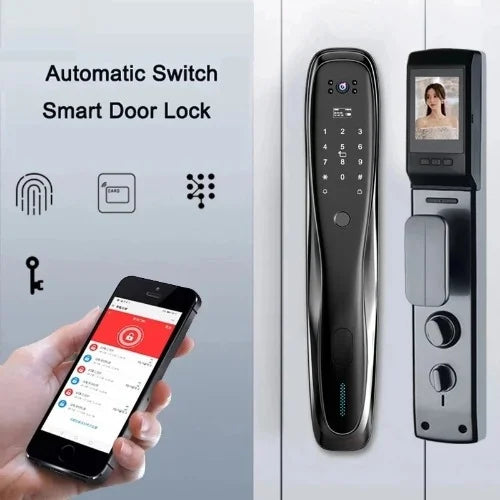





In modern offices, residential buildings, commercial facilities, industrial environments, and other controlled spaces, managing who can enter and exit is an important part of maintaining security. Traditional keys can be lost, copied, or misplaced, while manual access management can become difficult as the number of users increases.
The BASEC Multi-Function RFID Access Control Controller Board provides a practical electronic solution for managing access points through RFID identification and relay-controlled devices. It is designed to integrate with door locks, sensors, exit buttons, alarms, and other security or automation equipment.
What Is an RFID Access Control Controller Board?
An RFID access control controller board is an electronic control module that helps manage access to a secured door or entry point. Instead of relying solely on conventional keys, an RFID-enabled system can identify an authorized card or tag and trigger the connected access-control hardware.
The BASEC controller combines RFID authentication with relay outputs and multiple terminal connections, allowing installers to connect different components of an access-control system through one control board.
In a typical setup, the system can work with components such as:
-
RFID cards or tags
-
Electronic door locks
-
Exit buttons
-
Door sensors
-
Alarm devices
-
Access-control peripherals
-
Other automation equipment
The controller processes the access signal and can activate the connected relay-controlled device when the appropriate access condition is met.
Key Features of the BASEC RFID Access Control Controller
1. RFID Card & Tag Authentication
The controller supports RFID-based identification, allowing authorized users to gain access using compatible RFID cards or tags. This provides a convenient contactless method of authentication for controlled entry points.
2. Multiple Relay Outputs
One of the major advantages of the controller is its integrated relay outputs. These outputs can be used to control connected devices such as electronic locks, alarms, and other equipment within an access-control or automation system.
This makes the board useful beyond basic door access, especially where multiple controlled devices need to work together.
3. Multiple Terminal Connections
The board features screw terminal connections that provide organized connection points for sensors, locks, exit buttons, alarms, and other peripherals. This helps make installation and wiring more straightforward.
4. LED Status Indicators
Integrated LED indicators provide visual feedback about the board's operating and connection status. This can assist installers and technicians when checking the system during installation, configuration, and troubleshooting.
5. Compact PCB Design
The controller is built around a compact PCB layout with mounting holes, making it suitable for integration into control boxes, panels, and other access-control installations where space needs to be managed efficiently.
6. Flexible System Integration
The BASEC controller is designed for integration with different security and automation components, making it suitable for installations where an access-control system needs to communicate with locks, sensors, alarms, and other peripherals.
How Does the BASEC RFID Access Control Controller Work?
A typical RFID access-control process is straightforward:
Step 1: User presents an RFID card or tag
The user places an authorized RFID credential near the reader.
Step 2: The access system identifies the credential
The RFID system reads the credential and determines whether it meets the configured access requirements.
Step 3: The controller activates the appropriate relay
When access is authorized, the controller can trigger the connected relay output.
Step 4: The connected security device responds
The relay can operate an electronic lock or another connected device, allowing the required access action to take place.
Step 5: The system returns to its secured state
After the configured access operation, the connected locking or security equipment can return to its normal secured condition.
This type of architecture is commonly used in electronic access-control systems because the controller acts as the link between identification devices and physical security hardware.
Where Can It Be Used?
The BASEC Multi-Function RFID Access Control Controller Board can be incorporated into a variety of security and automation installations, including:
Offices & Corporate Buildings
Control access to offices, restricted rooms, staff areas, server rooms, and other controlled spaces.
Residential Buildings
The controller can form part of an electronic access system for apartments, residential compounds, gates, and secured entrances.
Commercial Facilities
Retail facilities, warehouses, hotels, and other commercial environments can use RFID-based access systems to manage controlled areas.
Industrial Facilities
Factories, workshops, and industrial sites can integrate RFID access control with electronic locking and security systems.
Smart Buildings
The controller can be integrated into broader building-security and automation systems where multiple devices need to work together.
Security-Controlled Areas
Restricted rooms, equipment areas, administrative spaces, and other sensitive locations can benefit from controlled electronic access.
Why Choose RFID Access Control?
RFID access control offers several practical advantages compared with traditional mechanical keys.
Contactless operation: Users can authenticate without inserting a physical key into a lock.
Convenient access management: RFID cards and tags can be incorporated into structured access-control systems.
Integration: RFID systems can work alongside electronic locks, alarms, sensors, and other security devices.
Reduced dependence on mechanical keys: Electronic credentials can simplify access management where multiple authorized users require entry.
Scalable security infrastructure: RFID controllers can form part of larger security and automation installations.
A Practical Solution for Modern Security Systems
Access control is no longer limited to traditional keys and mechanical locks. Modern security installations increasingly combine identification technology, electronic locking systems, sensors, alarms, and automation to create more controlled environments.
The BASEC Multi-Function RFID Access Control Controller Board brings several of these functions together in a compact control module, providing RFID authentication, relay outputs, LED indicators, and multiple terminal connections for security and automation peripherals.
Whether you are upgrading an existing access-control installation or setting up a new electronic security system, the controller can serve as an important component for connecting identification and physical access hardware.
Get the BASEC Multi-Function RFID Access Control Controller Board
Looking for a reliable controller for your next RFID access control, electronic locking, or security automation project?
The BASEC Multi-Function RFID Access Control Controller Board is available from BASEC Africa, with delivery options available in Lagos and other locations in Nigeria.
For professional installation, system integration, or product enquiries, contact BASEC Africa to discuss your access-control requirements and find the right solution for your project.
BASEC Africa — Security, Safety & Automation Solutions.

