








Finding reliable communication that doesn’t break the bank can be a challenge, especially when you need a durable and efficient walkie-talkie for work or outdoor adventures. Whether you’re coordinating a team or exploring the backcountry, this guide will help you discover the best budget walkie-talkie options that offer excellent performance without sacrificing affordability. You’ll learn what makes these radios tick, understand key features, and get expert recommendations tailored to your needs.
Understanding Walkie-Talkies: What Are They and How Do They Work?
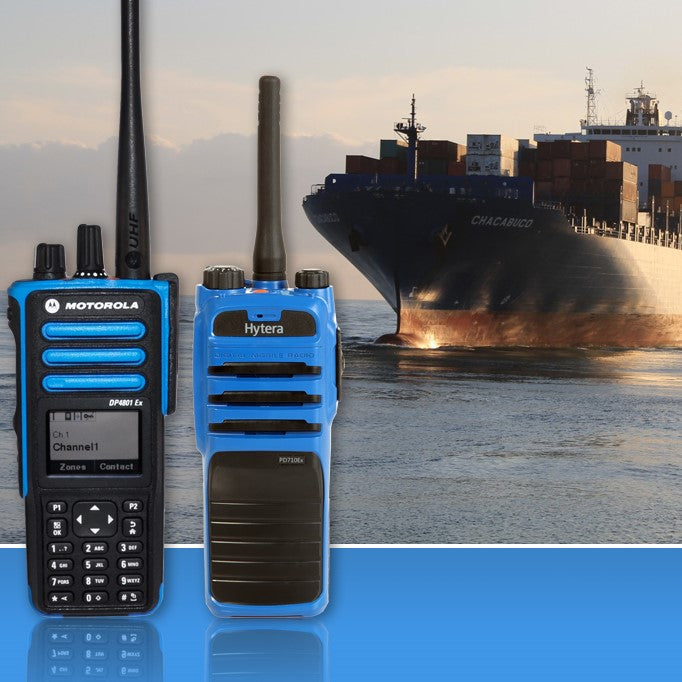
Walkie-talkies are portable handheld radios that enable two-way voice communication over short to medium distances without relying on cellular networks. The term "walkie-talkie" was coined during World War II, describing these compact devices that allowed soldiers to “walk” and “talk” simultaneously. Unlike other two-way radios, which may be fixed base stations or vehicle-mounted, walkie-talkies are designed for handheld, mobile use.
Basic walkie-talkies operate by transmitting radio waves on specific frequencies, allowing users to switch between channels to communicate. They typically use Family Radio Service (FRS) or General Mobile Radio Service (GMRS) frequencies in the United States. Common use cases include security personnel coordination, event management, construction site communication, and casual outdoor activities. To answer a common question: “What is walkie-talkie short for?” it’s simply a playful term combining “walking” and “talking,” highlighting its portability and hands-free operation.
Why Choose a Budget Walkie-Talkie? Key Benefits and Considerations
Despite the ubiquity of smartphones, budget walkie-talkies remain popular for reliable, instant communication that doesn’t depend on cellular service or data plans. They offer affordability without sacrificing essential features like clear transmission, decent battery life, and easy setup.
Budget radios are perfect for everyday scenarios such as coordinating small teams on a worksite, hiking trips, camping, festivals, or emergency use when cell service is spotty. They provide a great price point to enter two-way radio communication confidently.
That said, while budget models offer solid signal clarity and usability, they may have more limited range, fewer advanced features, or less rugged durability compared to premium devices. It’s important to have realistic expectations and choose a model that fits your core needs without expecting professional-grade performance.
How to Choose the Best Budget Walkie-Talkie
Choosing the best budget walkie-talkie starts with understanding the most impactful factors on performance: range, battery life, and durability. The range depends largely on transmission power and environmental conditions, while battery life dictates how long your radio stays operational during active use.
Walkie-talkies fall into different radio classes in the U.S., mainly Family Radio Service (FRS), General Mobile Radio Service (GMRS), and Amateur (ham) radios. Budget radios primarily use FRS frequencies, which require no license but have limited power output (up to 2 watts), ideal for shorter communication ranges. GMRS radios provide higher power (up to 50 watts) and longer range but require an FCC license, usually reserved for more advanced users.
Transmission power directly affects your effective range — though real-world range can be much less than advertised due to obstacles like buildings or terrain. Look for radios with solid signal transmission clarity that perform well in typical usage environments.
Privacy codes such as Continuous Tone-Coded Squelch System (CTCSS) and Digital-Coded Squelch (DCS) allow you to filter out other users on the same frequency, enabling clearer, private communications. This feature can be important in crowded areas or events.
For outdoor adventurers or work in wet conditions, checking the waterproof rating and ruggedness is vital. Ratings like IP56 or IP67 indicate resistance to dust and water immersion, enhancing walkie-talkie durability.
Battery types vary between rechargeable lithium-ion packs, AA/AAA replaceable batteries, or hybrid systems. Rechargeables offer convenience and longer walkie-talkie battery life, but replaceables allow easy swaps in the field without downtime. Consider charging options and runtime based on your usage patterns.
Ease of use matters too: simple, intuitive controls and lightweight packages make a big difference. Features such as integrated carabiners help carry your radio securely during outdoor adventures. Additionally, extras like NOAA weather alerts provide real-time safety updates in exposed environments, while VOX (voice-activated transmission) facilitates hands-free operation.
Top Expert-Recommended Best Budget Walkie-Talkies of 2026
Our expert picks were selected based on price, tested communication range, walkie-talkie battery life, durability, and ease of use. Each model was thoroughly evaluated in real-world conditions and offers excellent value for budget buyers.
Best Overall Budget Walkie-Talkie: Midland X-Talker T51VP3
Specifications: 22 channels, up to 28-mile range (line of sight), IPX4 waterproof rating, rechargeable battery with belt clip and integrated carabiner.
Pros: Easy to set up, solid transmission clarity, excellent battery life, durable rubberized plastic case.
Cons: Range limited in dense urban or forest environments, lacks advanced GMRS power.
Tested to deliver great communication range and reliability for casual or work use, the Midland T51VP3 strikes a balance between performance and price.
Best Battery Life Budget Radio: Retevis RT22
Specifications: 16 FRS channels, up to 3 miles range, lithium-ion rechargeable batteries with up to 18 hours of talk time, VOX and LED flashlight included.
Pros: Tiny, lightweight design, excellent battery endurance, intuitive interface.
Cons: Limited range compared to higher wattage radios, basic waterproofing.
This model shines with a lightweight package and long-lasting battery, perfect for all-day use in environments where charging is limited.
Best Waterproof Budget Walkie-Talkie: Motorola Talkabout T402
Specifications: 22 channels, up to 20-mile range, IPX4 waterproof, NOAA weather alerts, rechargeable NiMH batteries.
Pros: Solid waterproof rating, integrated weather alerts, straightforward controls.
Cons: Battery life moderate, heavier than some compact models.
A reliable option for outdoor enthusiasts needing a rugged radio that performs well in wet conditions.
Lightweight and Compact Budget Model: BaoFeng BF-888S
Specifications: 16 channels, up to 5 miles range, uses AA batteries, compact and lightweight design.
Pros: Affordable, easy to carry, simple operation.
Cons: No NOAA alerts, basic waterproof rating.
Perfect for users who want a tiny light radio without extra features, suitable for short-distance communication.
Best for Outdoor Adventures on a Budget: Cobra ACXT1035R FLT
Specifications: 22 channels, up to 37-mile range (under ideal conditions), IPX5 waterproof, NOAA weather alerts, rechargeable battery pack.
Pros: Excellent range in open terrain, wrist mic included, solid signal quality.
Cons: Pricier than other budget models, heavier design.
Designed for backcountry outings that require reliable communication and weather updates on a budget.
Walkie-Talkie Comparison Chart
| Model | Channels | Range (miles) | Waterproof Rating | Battery Type | Approx. Price |
|---|---|---|---|---|---|
| Midland X-Talker T51VP3 | 22 | 28 | IPX4 | Rechargeable Lithium-ion | $$ |
| Retevis RT22 | 16 | 3 | Basic Splash Resistant | Rechargeable Lithium-ion | $ |
| Motorola Talkabout T402 | 22 | 20 | IPX4 | NiMH Rechargeable | $$ |
| BaoFeng BF-888S | 16 | 5 | Minimal | AA Batteries | $ |
| Cobra ACXT1035R FLT | 22 | 37 | IPX5 | Rechargeable Battery Pack | $$$ |
Our testing involved range checks in urban, forest, and open terrains, battery endurance tests under continuous use, drop and waterproof resistance trials, and signal clarity assessments. Each walkie-talkie’s ease of setup and user interface intuitiveness were also evaluated, simulating conditions faced by security personnel, construction teams, and outdoor participants.
Testing and Real-World Performance: How We Evaluated the Best Budget Walkie-Talkies
To ensure reliability in actual field conditions, we tested budget walkie-talkies across diverse environments including dense woods, open fields, and city blocks. Range tests measured maximum clear communication distance under typical user scenarios rather than optimal line-of-sight claims.
Battery endurance was assessed by continuous voice transmission until power depletion, helping gauge realistic walkie-talkie battery life. We also performed ruggedness testing involving accidental drops and exposure to moisture, examining how well radios withstand active use on jobsites and outdoor adventures.
Transmission clarity checks ensured consistent sound quality without static or interruptions, vital for reliable communication. We placed attention on interface ease of use and initial setup — radios with simple controls, clear displays, and quick channel switching received high marks, matching demands of emergency responders and event staff.
Essential Walkie-Talkie Features for Budget Buyers
No walkie-talkie guide is complete without highlighting key features that benefit budget buyers. NOAA weather alerts stand out as an essential at-risk outdoor users, delivering up-to-date emergency weather info right through your radio.
Voice-activated transmission (VOX) allows hands-free communication, beneficial when you’re multitasking. Privacy codes like CTCSS and DCS reduce cross-talk and interference, making conversations clearer in busy radio environments.
Easy-to-use controls and straightforward menus lower the barrier for beginners and casual users, facilitating quick adoption. Regarding power, rechargeable batteries offer convenience and ecological advantages, while replaceable AA/AAA options provide field-swappability without waiting for charges.
Lightweight radios with integrated carabiners enhance portability, allowing you to clip your device to belts or backpacks securely. When considering durability, waterproof ratings such as IP56 or IP67 indicate the radio’s ability to resist water splashes or temporary immersion, critical for outdoor and rugged work use.
Common Challenges With Budget Walkie-Talkies and How to Overcome Them
Budget walkie-talkies often come with limitations such as reduced range compared to licensed GMRS models, shorter battery life, and less robust build quality. To maximize effective range, place yourself in open areas avoiding tall buildings or dense forests and keep units elevated where possible.
Paying attention to battery management—fully charging before use and carrying spare batteries—helps avoid unexpected power loss. To handle interference or cross-talk, selecting privacy codes and switching channels can reduce disruptions.
Users whose communication demands exceed budget radio capabilities, such as requiring longer transmission distances or greater feature sets, should consider stepping up to mid-tier GMRS radios that offer more power and licensed frequency options.
Walkie-Talkie Usage Tips and Best Practices
Clear communication requires proper radio etiquette. Always wait a moment before speaking after pressing the push-to-talk button to avoid cutting off your message’s start. Keep transmissions concise and avoid talking over others.
Selecting appropriate channels and privacy codes helps minimize interference with nearby radios. Conduct radio checks before critical use to ensure signal clarity and proper functioning.
Secure your radio with integrated carabiners or clips to prevent loss or damage during active movement. Regular maintenance such as cleaning battery contacts and monitoring for firmware updates extends your device’s life.
Advanced Options: When to Consider GMRS or Amateur Radios Beyond Budget Models
For users needing greater range, higher power, or specialized functionality, GMRS radios provide up to 50 watts of transmission power and support repeater use, significantly extending range. Obtaining a simple FCC GMRS license is required but straightforward.
Amateur (ham) radios offer extreme coverage and customizable features for enthusiasts or professionals, though they involve more complex licensing and setup.
Assess your communication needs carefully—if budget walkie-talkies meet your day-to-day usage with acceptable range and features, they’re ideal. But if you require robust performance in challenging environments, upgrading to GMRS or ham radios is justified.
FAQs About Budget Walkie-Talkies
What is walkie-talkie short for?
It’s a playful term combining “walking” and “talking” to emphasize the device’s portable, hands-free communication ability.
What is the strongest channel on a walkie-talkie?
Walkie-talkies have multiple channels; no single channel is strongest, but some frequencies may travel better in certain conditions. Users should select channels free from interference.
How far can a budget walkie-talkie really reach?
Realistically, budget walkie-talkies cover 1 to 3 miles in urban or forested areas and up to 20-30 miles in open terrain under ideal conditions.
Are rechargeable batteries better than regular AA/AAA batteries for walkies?
Rechargeable batteries offer longer life and convenience, but AA/AAA batteries are easy to swap in the field, offering flexibility.
What is the difference between walkie-talkie and a two-way radio?
All walkie-talkies are two-way radios designed for handheld use. Two-way radios may also include vehicle or base station models with more features and power.
How waterproof are budget walkie-talkies typically?
Many budget models have waterproof ratings like IPX4 (splash-resistant) or IPX5/IPX6 (water jets), while few offer IP67 full immersion protections.
How to extend the battery life of walkie-talkies?
Lower volume levels, use power-saving modes, avoid prolonged transmissions, and turn off units when not in use to conserve battery life.
Final Recommendations: Best Budget Walkie-Talkie for Your Needs
Choosing the best budget walkie-talkie comes down to matching your communication needs with device features. For general use, the Midland X-Talker T51VP3 offers solid performance and versatility. Outdoor adventurers should consider models like the Cobra ACXT1035R FLT for waterproofing and weather alerts. If battery life and portability are top priorities, the Retevis RT22 is ideal.
Balancing cost, durability, and useful features ensures you get a radio that performs well without overspending. Reading user reviews and considering after-sale support can make a significant difference in your long-term satisfaction.
Invest wisely in dependable communication gear that keeps you connected when it matters most.